 Ultimate guide
Cost of PRP Therapy for Joints: What to Expect
Last Updated: November 17, 2026
Quick Summary
The cost of prp therapy for joints depends on the joint treated, the platelet concentration and processing method, and whether imaging guidance is used. Knees are typically lower to mid cost, hips and shoulders mid to higher, and spine injections highest. Insurance often classifies PRP as investigational, so confirm coverage and request itemized quotes.
- Ask providers to separate the professional fee from any facility charge when comparing estimates.
- Knee injections are usually lower to mid cost because the joint is easy to access.
- Spine injections cost the most due to advanced imaging and specialist skill.
- Request the exact CPT and ICD-10 codes before calling your insurer about coverage.
- A letter of medical necessity from your provider is the most useful document in an appeal.
Table of Contents
- What Drives the Cost of PRP Therapy for Joints
- PRP Injection Cost by Joint: Knee, Hip, Shoulder, and Spine
- PRP Knee Injection Cost: Why Knees Lead the Price List
- Is PRP Injection Cost Covered by Insurance?
- In-Clinic vs. Hospital Setting: Where You Pay More
- Geographic Price Variance and Financing Options
- PRP Treatment for Knee Side Effects and Recovery Costs
- PRP Treatment for Knee Success Rate: Is It Worth the Cost?
- Booking a PRP Consultation at iChiro Clinics
- Frequently Asked Questions
What Drives the Cost of PRP Therapy for Joints
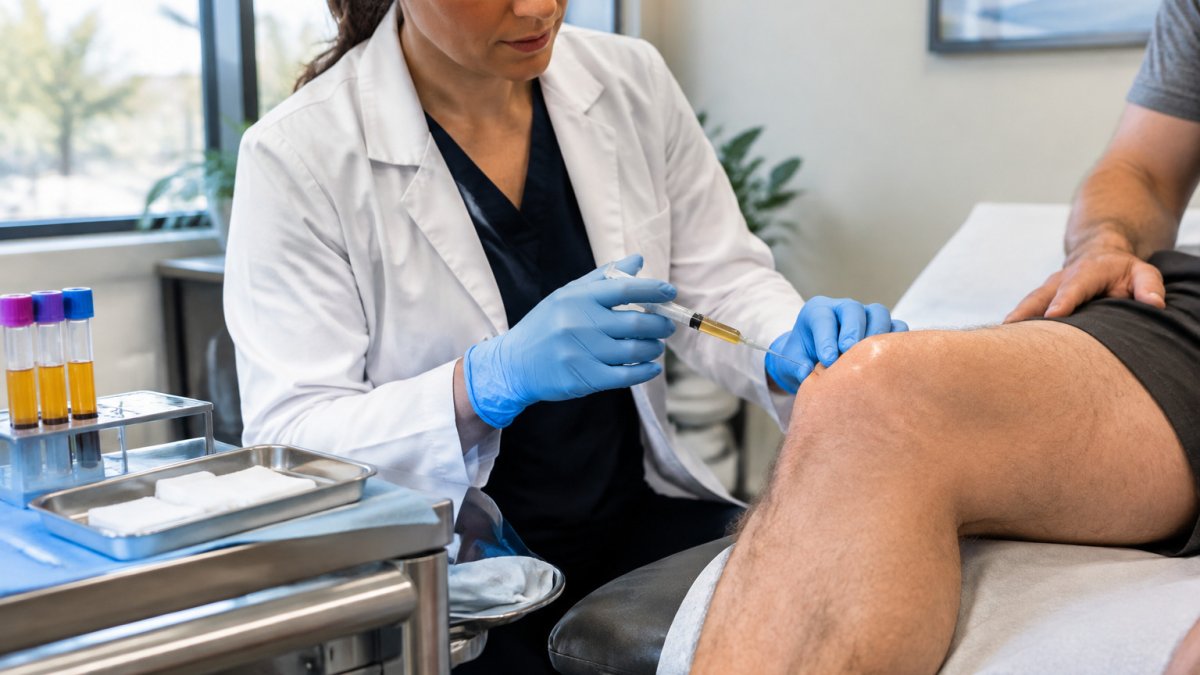
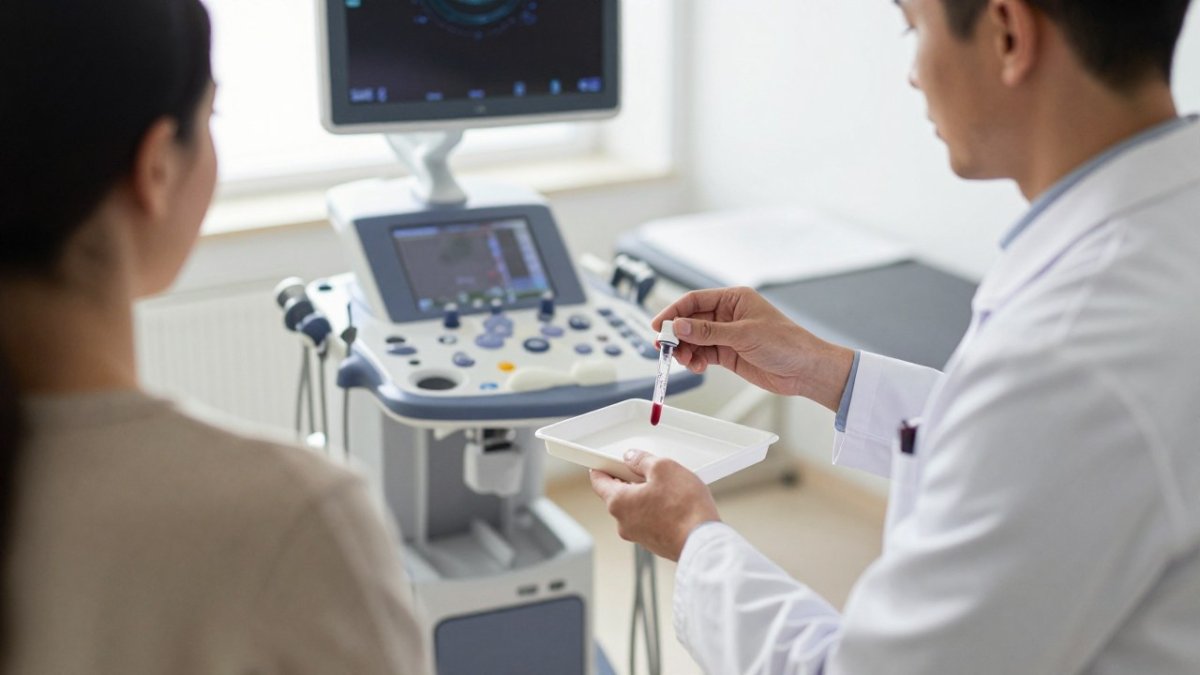
The cost of PRP therapy for joints reflects what goes into producing a usable dose of your own concentrated platelets, not the price of a single needle stick. PRP therapy is a regenerative treatment in which a clinician draws a small amount of your blood, spins it in a centrifuge to isolate the platelet-rich layer, and injects that concentrate into a damaged joint under image guidance. (Source: National Institutes of Health)
Procedure Fees vs. Facility Charges
Two line items dominate most quotes: the professional fee and the facility charge. The procedure fee covers the clinician's time, the injection itself, and any imaging used to place it accurately. Facility charges may cover the treatment room, the centrifuge and processing supplies, and single-use kits, depending on the provider. When you compare estimates, ask for these separately. A low procedure fee paired with a steep facility charge is not a bargain; it is a different billing structure.
Platelet Concentration and Processing Method
Not all PRP is the same product. Systems differ in how much platelet concentration they achieve and whether they capture white cells alongside platelets. A higher-concentration preparation, or one using a closed processing kit, generally costs more to produce. Ultrasound-guided placement adds cost but improves accuracy, particularly in deeper joints. In practice, the processing method is one of the few cost drivers you can actually question during a consultation.
PRP Injection Cost by Joint: Knee, Hip, Shoulder, and Spine
Cost scales with how difficult a joint is to reach and how much imaging guidance the injection requires. Superficial joints are faster and simpler to treat; deep joints demand more precision. The table below summarizes the general pattern seen across musculoskeletal care, with pricing depending on the provider, the joint, and the preparation used.
| Joint | Relative Cost Level | Main Cost Drivers |
|---|---|---|
| Knee | Lower to mid | Accessible joint, often no complex guidance |
| Shoulder | Mid | Rotator cuff and tendon targets, imaging guidance |
| Hip | Mid to higher | Deep joint, ultrasound or fluoroscopy guidance |
| Spine | Highest | Advanced imaging, specialist skill, greater risk |
Pricing depends on the treatment plan, which is built after an evaluation. For current pricing or a quote, contact iChiro Clinics directly through our website.
PRP Knee Injection Cost: Why Knees Lead the Price List
Knees are often treated with PRP, and their accessibility means many providers can place the injection without the advanced imaging that adds cost in other joints.
That said, knee pricing still varies widely. A provider treating osteoarthritis may recommend a series of injections rather than a single dose, and the total cost of the treatment course matters more than the per-injection figure. Ask whether the quote covers one injection or the full series, and whether follow-up visits are included.
Is PRP Injection Cost Covered by Insurance?
Coverage for PRP injections varies by payer. Some payers classify platelet-rich plasma as investigational or not medically necessary for musculoskeletal use, which can leave the full cost to the patient. Coverage is decided plan by plan, so the only authoritative answer comes from your insurer, not from a clinic, and not from a general article.
Why Payers Deny PRP Claims
Three patterns drive most denials:
- Investigational classification. Many plans exclude treatments they consider unproven for the specific diagnosis, even where PRP is widely used in practice.
- Experimental vs. medically necessary. A plan may cover PRP for one indication and deny it for another; the diagnosis code attached to your claim matters as much as the procedure itself.
- Cosmetic or self-pay carve-outs. Some policies route regenerative injections to a self-pay category regardless of medical need.
The Codes That Decide Your Claim
Before you call your insurer, ask your provider's billing office for the exact codes they will submit. You will typically see a CPT code for the injection procedure, a code for the blood draw and processing, and an ICD-10 diagnosis code for your joint condition. Give all of them to the insurer's member services representative and ask for a written predetermination or prior authorization decision. A verbal "it should be covered" is not a commitment.
Watch out: a quote that says "insurance may cover part of this" without listing the codes is a red flag, the office visit, imaging, and injection are often billed separately, and only some of those line items may be eligible.
If You Are Denied: Appeals and Letters of Medical Necessity
A denial is not always final. Ask the insurer for the specific denial reason and the appeal deadline in writing. A letter of medical necessity from your treating provider, documenting your diagnosis, prior treatments that failed, and why PRP is appropriate, is the single most useful document in an appeal. Some plans review these case by case, and a well-documented appeal occasionally reverses an initial denial.
HSA, FSA, and Financing Pathways
If insurance will not pay, tax-advantaged accounts and payment plans can soften the out-of-pocket hit:
- HSA and FSA. Health savings and flexible spending accounts may reimburse eligible medical expenses. Eligibility for a specific procedure is not guaranteed, so confirm with your plan administrator and keep itemized receipts.
- Third-party medical financing. Medical credit cards and installment lenders offer monthly payment plans; compare the promotional APR against the standard rate that applies after the promo period ends.
- In-house payment plans. Some clinics split the series cost across visits. Get the terms, interest, fees, and missed-payment consequences, in writing.
Questions to Ask Your Insurer
- Is PRP for my specific joint and diagnosis excluded, investigational, or covered?
- Which procedure and diagnosis codes will be submitted?
- Is prior authorization required, and what is the turnaround time?
- If denied, what is the appeal process and deadline?
- Are the office visit, ultrasound guidance, and follow-up visits billed separately?
Get the answers in writing before you book. The coverage question is really a coding and documentation question, and the patient who arrives with codes in hand gets a far more useful answer than the one who asks "do you cover PRP?"
In-Clinic vs. Hospital Setting: Where You Pay More
The same PRP procedure can carry a very different bill depending on where it happens. The setting is one of the most under-discussed cost drivers in regenerative medicine, and it is the one patients can most easily control.
How Facility Fees Work
Hospital outpatient departments bill in two parts: a professional fee for the clinician and a facility fee for the use of the hospital's space, equipment, and staff. That facility fee is separate from the procedure itself and can be substantial. Independent clinics and physician offices typically bill a single professional fee that bundles the procedure, supplies, and room use into one price. For a cash-pay treatment like PRP, that bundled structure is usually easier to compare and often lower overall. Understanding these underlying overhead expenses helps clarify why BioLife Science maintains such distinct billing models for regenerative procedures.
Site-of-Service Payment Rules
Medicare and some commercial plans may pay different rates depending on the site of service. Even when PRP itself is not covered, the surrounding services, the office visit, imaging, and any related evaluation, can be billed at hospital rates. That is why a hospital-based quote can look similar on the injection line but cost more once the ancillary charges are added.
Reading a Written Estimate
Ask every provider for a written estimate that separates the line items. A useful estimate lists:
- Professional/procedure fee
- Facility fee, if any
- Imaging guidance (ultrasound or fluoroscopy)
- Processing kit and supplies
- Number of injections in the quoted series
- Follow-up visits and whether they are included
Watch out: a single all-in number with no breakdown makes it impossible to tell whether imaging, the full injection series, or follow-up care is included, compare line items, not totals.
When the Hospital Setting Is Worth It
Higher cost is not automatically worse. Hospital settings may be the right choice for patients with complex medical histories, those who need fluoroscopy for deep joints like the hip or spine, or those whose insurance will cover the surrounding evaluation even if it will not cover the PRP itself. The trade-off is real: you may pay more for the facility but gain access to advanced imaging and coordinated specialty care.
The Practical Takeaway
For a straightforward knee or shoulder injection paid in cash, a clinic setting may offer a clearer bundled price. For complex cases or deep-joint injections requiring advanced imaging, compare the hospital's itemized estimate against a clinic's, and ask both whether the quoted price covers the full series or a single injection.
Geographic Price Variance and Financing Options
Prices for regenerative treatments vary by region, driven by local overhead, demand, and the number of providers offering the service. Urban markets with higher operating costs generally run higher than smaller markets. Rather than chase the cheapest quote, compare what each estimate includes: imaging guidance, number of injections, and follow-up.
Financing helps bridge the gap for many patients. Common options include:
- Third-party medical financing with monthly payment plans
- Health savings or flexible spending accounts, where eligible
- In-house payment plans offered by some clinics
Confirm the terms in writing, including any interest or fees, before you sign.
PRP Treatment for Knee Side Effects and Recovery Costs
PRP treatment for knee side effects is generally well tolerated, but the recovery period carries its own costs in time and, sometimes, money. Possible side effects include temporary soreness, swelling, and warmth at the injection site, which may settle within a few days. Some patients experience a brief increase in discomfort before improvement begins.
Plan for the practical costs: time off work, temporary limits on activity, and possibly over-the-counter pain relief. Your provider may recommend avoiding strenuous activity for a short period and using ice. Follow-up visits may add to the total, so ask whether they are included in your quote. If you have questions about what is normal after an injection, contact your provider rather than guessing.
PRP Treatment for Knee Success Rate: Is It Worth the Cost?
PRP treatment for knee success rate varies by patient, joint condition, and how success is measured. Some patients report reduced pain and improved function, while others see limited benefit. Outcomes can depend on the severity of the joint damage, the concentration used, and adherence to aftercare.
Is it worth the cost? That depends on your goals and your alternatives. PRP is generally less invasive than surgery, and it may be considered as an option for some patients, though results vary. It is not a guaranteed fix, and it does not reverse advanced joint damage. A candid consultation should tell you what results are realistic for your case before you spend anything.
Booking a PRP Consultation at iChiro Clinics
Choosing a provider is an important decision for both your outcome and your total cost. iChiro Clinics combines chiropractic care with regenerative medicine, including PRP and stem cell therapy, and builds customized treatment plans after a thorough evaluation. Dr. Michael Kwast, founder, has served the Grand Rapids area since 1998, and the clinic tracks progress with regular retesting.
If you are weighing PRP against surgery or long-term pain management, start with a conversation. We will explain what the treatment involves, what it realistically costs, and whether it fits your situation.
The right next step is a proper evaluation, not a price list. At iChiro Clinics, we pair regenerative treatments like PRP and stem cell therapy with chiropractic care and customized, data-driven plans, then track your progress with regular retesting so you can see whether it is working. Get started with iChiro Clinics and build a treatment plan grounded in your own evaluation.
Frequently Asked Questions
How much does PRP therapy for joints cost?
Pricing depends on the number of injections, the joint treated, imaging guidance, and your provider. For current pricing or a quote, contact iChiro Clinics through our website. The total depends on the joint treated, whether ultrasound guidance is used, the clinic setting, and your location. Because PRP is prepared from your own blood, there is no drug cost, but processing and clinician time still drive the bill. Ask for an itemized quote covering every injection in the planned course before you commit.
Does insurance cover PRP injections for joint pain?
Coverage varies by insurer and plan, and some payers may treat PRP as investigational or not medically necessary for joint pain. Ask your insurer for a written coverage decision before treatment.
What is the PRP treatment for knee success rate?
Published results vary widely by condition and study design. Research results vary by condition and study design, and outcomes can depend on factors such as severity of joint damage and treatment approach. Your clinician should review your imaging and history to set realistic expectations rather than quoting a single percentage.
What are common PRP treatment for knee side effects?
Most people report temporary soreness, swelling, or warmth at the injection site for one to three days. Less common issues include brief stiffness, a small bruise, or a short flare of joint inflammation. Serious complications are possible, so discuss your individual risks with a qualified clinician before treatment. Tell your clinician about blood thinners or active infection before treatment, and follow aftercare instructions on activity and ice.
How long does a PRP shot last?
Relief duration varies. Some patients report improvement lasting for a period after a course, while others may need maintenance injections sooner. Response depends on the joint, the degree of arthritis or injury, your activity level, and how many injections you received. Keeping a symptom log and attending follow-up visits helps your clinician judge whether a booster injection makes sense or whether another approach should be considered.
Can PRP work on a 50 year old with arthritis?
Age alone does not rule out PRP. What matters more is the stage of joint disease, your overall health, and whether the pain source is inflammation, tendinopathy, or advanced cartilage loss. Candidacy depends on individual factors, and a clinician can advise whether treatment is appropriate. A thorough evaluation with imaging is the only way to know whether PRP is a sensible option for you.